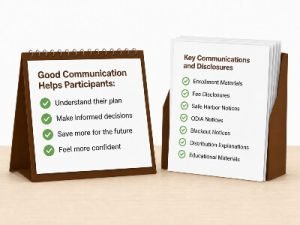
 Participant communication does not get the same attention as investments or fees, but it probably should. Clear, timely, and accurate communication is an important part of retirement plan oversight. When participants are confused about eligibility, deferral elections, matching contributions, investment choices, or distribution options, it can create real problems.
Fiduciaries have a responsibility to make sure the information being provided is accurate, understandable and that required notices and disclosures are distributed appropriately. These items can include:
- enrollment materials,
- fee disclosures,
- safe harbor notices,
- QDIA notices,
- blackout notices,
- distribution explanations, and
- general participant education materials.
Unfortunately, many communication problems are not obvious. Sometimes the required materials are written in a way that no normal person would ever voluntarily read, much less understand. Sometimes they are distributed, but not on time. And, occasionally, participant education can cross the line into advice without the plan sponsor realizing it. Good fiduciary oversight means paying attention not just to whether communications go out, but whether they are understandable, accurate, and mirror actual plan operations. For example:
- Are employees clearly told when they become eligible?
- Are contribution and match rules explained correctly?
- Are investment materials balanced and not misleading?
- Are participants getting required notices when they should?
- Are questions being answered consistently?
This can be key because confusing communications can lead to poor participant decisions, missed opportunities, complaints, and administrative errors.
Employees should receive straightforward, accessible information about their retirement plan. Each notice or disclosure does not need to be a Pulitzer Prize winning piece of literature, and every participant communication issue is not automatically a fiduciary breach. The goal is to simply ensure participants get the information they need, when they need it, and in a way that helps them understand their choices.
As the regulatory landscape and effective means of participant communication continue to evolve, it may be worth revisiting whether the plan’s notices and education materials still meet the goal of a sound communication process.