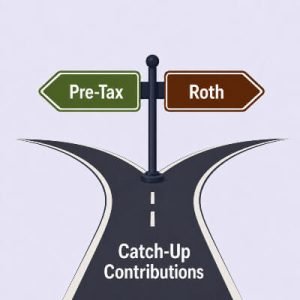
 Beginning with the 2026 calendar year, some of the higher-paid employees are not permitted to make age 50+ catch-up contributions on a pre-tax basis. This means that these participants are required to make any catch-up contributions on a Roth basis. This rule applies to both 401(k) and 403(b) plans.
Before going into the nuts and bolts of this new rule, here is a quick primer on the difference between pre-tax and Roth 401(k) contributions. Pre-tax 401(k) contributions are not subject to withholding taxes when the contribution is actually made. Roth 401(k) contributions are “after tax” contributions, meaning that they are subject to withholding taxes when the contribution is made. Another key difference is the future tax impact. The pre-tax amounts, including accumulated earnings, will be taxable when the participant withdraws the money from the plan. As the Roth amounts were already taxed, only the accumulated earnings could be subject to taxation. Generally, after five years and age 59-1/2, the earnings become tax-free upon distribution.
Here is a user-friendly explanation of this Roth Catch-Up requirement. All participants who are both at least age 50 and whose FICA wages (i.e. box 3 on the W-2) for the previous calendar year exceeds $150,000 are only permitted to make catch-up contributions on a Roth basis. The $150,000 FICA wage threshold is indexed and may change for future years.
For example, Sophia is age 54 and had FICA wages of $160,000 for the 2025 calendar year. In calendar year 2026, any catch-up contributions she chooses to make must be Roth, not pre-tax.
One of the first practical questions is whether the plan permits Roth 401(k) contributions and catch-up contributions. The employer may need to decide whether (1) to add Roth provisions to their plan or (2) discontinue catch-up contributions for all employees.
Assuming that Roth 401(k) contributions are permitted, it is important to determine and document how you are implementing the new requirement. If your process has not been documented yet, here are some of the questions to consider:
Who is responsible for identifying which highly paid individuals (“HPIs”) are subject to the new rule?
- Who is responsible for identifying which highly paid individuals (“HPIs”) are subject to the new rule?
- When an HPI starts to make catch-up contributions, what does payroll need to do?
- What happens if the HPI did not elect to make Roth 401(k) contributions? Is there a deemed election?
While the IRS has provided acceptable methodology for correcting errors, it is always best to be prepared to handle this change properly from the get-go.
It is necessary to communicate this change to the participants who are subject to this rule. In addition to getting instructions for handling catch-up contributions (i.e. switch to Roth or stop 401(k) contributions), each affected participant should be informed that this change is required by law, it only impacts the catch-up contributions, and they may want to consult with their tax advisor about any personal tax ramifications.
To wrap this synopsis up, here are a few things business owners may want to consider when documenting their procedures to comply with this rule:
- Confirm whether the plan permits Roth 401(k) contributions and catch-up contributions.
- Coordinate any necessary plan amendments with your TPA.
- Confirm that payroll can timely identify the affected participants.
- Review the 401(k) elections for all affected participants and ensure that no updates or adjustments are needed.
- Ensure that, when required, payroll has a process for switching the catch-up contributions to Roth and making these deposits to the Roth source at the recordkeeper.
- Communicate this change to the affected participants.
The Roth catch-up rule change can be manageable, especially for employers who have prepared for it. Documented procedures are a must if there is ever an error to correct. If you have any questions or we can assist you with this change, please let us know.
Contact Us