 Small business owners are often practical, decisive, and consistently wear multiple hats.
If they are also a retirement plan sponsor, one of the hats they may be surprised to find they are wearing is “fiduciary”. One of the most common misconceptions among small business owners is that fiduciary liability is only a real issue for large employers with formal committees, multiple vendors, and massive governance binders.
Small plans carry meaningful fiduciary responsibility too. In fact, smaller businesses often have fewer layers of internal oversight, commonly resulting in confusion and unintended procedural gaps. A few of the misunderstandings that show up again and again are:
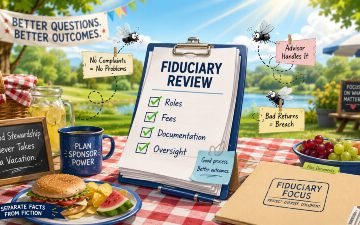
“Our advisor handles the fiduciary part”
The advisor might handle some of it, but definitely not all of it. Just how much depends on the advisor’s role and the scope of the arrangement. Hiring help can strengthen the process, but it does not automatically eliminate the business owner’s responsibilities.
“We are too small to need formal governance”
A small plan may not need a large committee or a complicated governance structure, but it still needs oversight. The business owner needs to understand who is making decisions, how fees are reviewed, how investments are monitored, and how operational compliance is being handled.
“If nobody complains, everything is probably fine”
Silence is not the same thing as compliance. Regular plan reviews can identify fee issues, operational mistakes, or documentation gaps long before anyone notices anything is amiss.
“The TPA or recordkeeper would tell us if something were wrong”
While they often do alert you to issues, there are times when a problem falls outside their responsibilities. That’s why it’s so important to clearly understand who is responsible for what.
“Fiduciary liability means getting sued over investments”
Investment lawsuits get attention, but fiduciary risk can also arise from administrative failures, insufficient oversight, missed deferrals, poor documentation, or unreasonable fees.
Never fear – small business owners do not need to become ERISA experts to improve their fiduciary position. They simply need to understand that fiduciary responsibility exists, applies to small plans as well as large plans, and can be managed with a sound process including regular reviews and documentation.
For small business owners sponsoring retirement plans, one of the smartest moves is simply getting clear on which responsibilities are theirs and how those responsibilities are being carried out. Engaging a retirement plan expert to help figure it out is a good place to start.