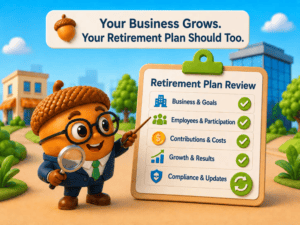
 A retirement plan is often established at one point in a company’s history and then left largely unchanged.
Meanwhile, the business keeps evolving. Employees are hired. Payroll increases. Ownership changes. New goals take shape.
What worked well five years ago may no longer be a good fit today.
The Problem: The Plan No Longer Matches the Business
Business owners may begin to notice signs that something is not working as expected:
- Owners cannot contribute as much as they anticipated.
- Employee participation is disappointing.
- Employer contributions feel expensive without producing clear value.
- The plan has become more difficult to administer.
- The workforce looks very different from when the plan was established.
- No one can clearly explain why the plan is designed the way it is.
A plan can remain technically compliant while still falling short of the business owner’s goals. That is where frustration often begins. The business is paying for and administering a retirement plan, but it is not clear whether the plan is really doing what it should.
Why This Happens
Retirement plan design is usually based on a company’s ownership, workforce, compensation structure, budget and priorities. When those factors change, the original design may become less effective.
For example, a contribution formula that worked well with a small, stable group may produce very different results after the company grows. A plan that once helped owners save effectively may become limited by changes in employee participation or compensation.
The plan is probably not broken, but the plan design may need to catch up with the business.
How TNJ Helps
At TNJ, we begin by asking what the business owner wants the plan to accomplish.
That may include:
- Increasing owner contribution opportunities
- Improving employee participation
- Controlling employer costs
- Supporting recruitment and retention
- Simplifying administration
- Addressing a change in ownership or workforce structure
We then review how the current plan is operating and whether its design still supports those goals.
Sometimes the answer is “yes”, the plan is working well and no significant changes are needed. In other cases, adjustments to eligibility, contributions, matching provisions or other plan features may produce better results.
The goal is not to recommend changes for the sake of change. It is to help the business owner make sure that the plan continues to meet the established goals.
A Retirement Plan Should Evolve With the Business
A retirement plan should not remain frozen in time while the company sponsoring it changes. A periodic review can provide clarity, identify opportunities and confirm that the plan is still aligned with the business.
The question is not only whether the plan is compliant. It is whether the plan is still working for the people who sponsor it.